A five-minute prototype went up in the afternoon, was reworked in the evening, then became the base for a full game: one region with menus, saves and a boss, a recurring polish run, and the Sunken Grove as its surface hub.
6entries6screenshots1agent
history
14:36history
Groundwork: a test level, then a home for the game
projectsetup
The day's first Unity work was a throwaway: a small third-person course (Shard Run) in a separate Unity 6.2 project. You collect three shards to open an exit; falling returns you to a checkpoint. It got the Unity CLI, licensing and a Mac build working, and caught one setup bug: the first checkpoint put the player partly inside the starting platform. Shard Run stays separate from the game and was not changed after this.
Jeremy then asked for a proper home for the plant game. The PlantGame folder was created with a README brief drawn from his ChatGPT project Plant video game (plant-machine life, materials that join living systems and machinery, underground and surface places) and an AGENTS.md with the first rules: plain language, and ask before treating names, lore or mechanics as canon. Codex could not register the project in its own interface, so Jeremy did that step himself.
15:34history
The first playable prototype
prototypegameplay
Jeremy asked for a plan to start a prototype, using Blender and possibly Tripo for art and Unity for the game. The plan: a 5-10 minute third-person action/exploration level for Mac, keyboard/mouse and gamepad, placeholder art. It should answer three questions: does moving and fighting feel good, is connecting to plant-machine structures clear, and does the place feel like this world?
It was built in about 20 minutes:
A new Unity 6000.3.25f1 project (URP, Input System, Cinemachine, AI Navigation, test framework) with local Git and Git LFS.
The route: a starting chamber, a root node you hold Connect on to grow a bridge, a clearing with a checkpoint and one guardian that warns with an amber glow before it strikes, then an exit node and a gate. A separate movement lab for testing.
A Blender seedpod to prove the Blender-to-Unity path, and synthesized sounds.
Four of five tests passed at first. The fifth caught a real bug: the bridge reference was not saved in the scene. It was fixed, and the Mac build succeeded.
18:48history
A second pass: stricter rules, real models, a readable level
prototypegameplaycharacterslighting
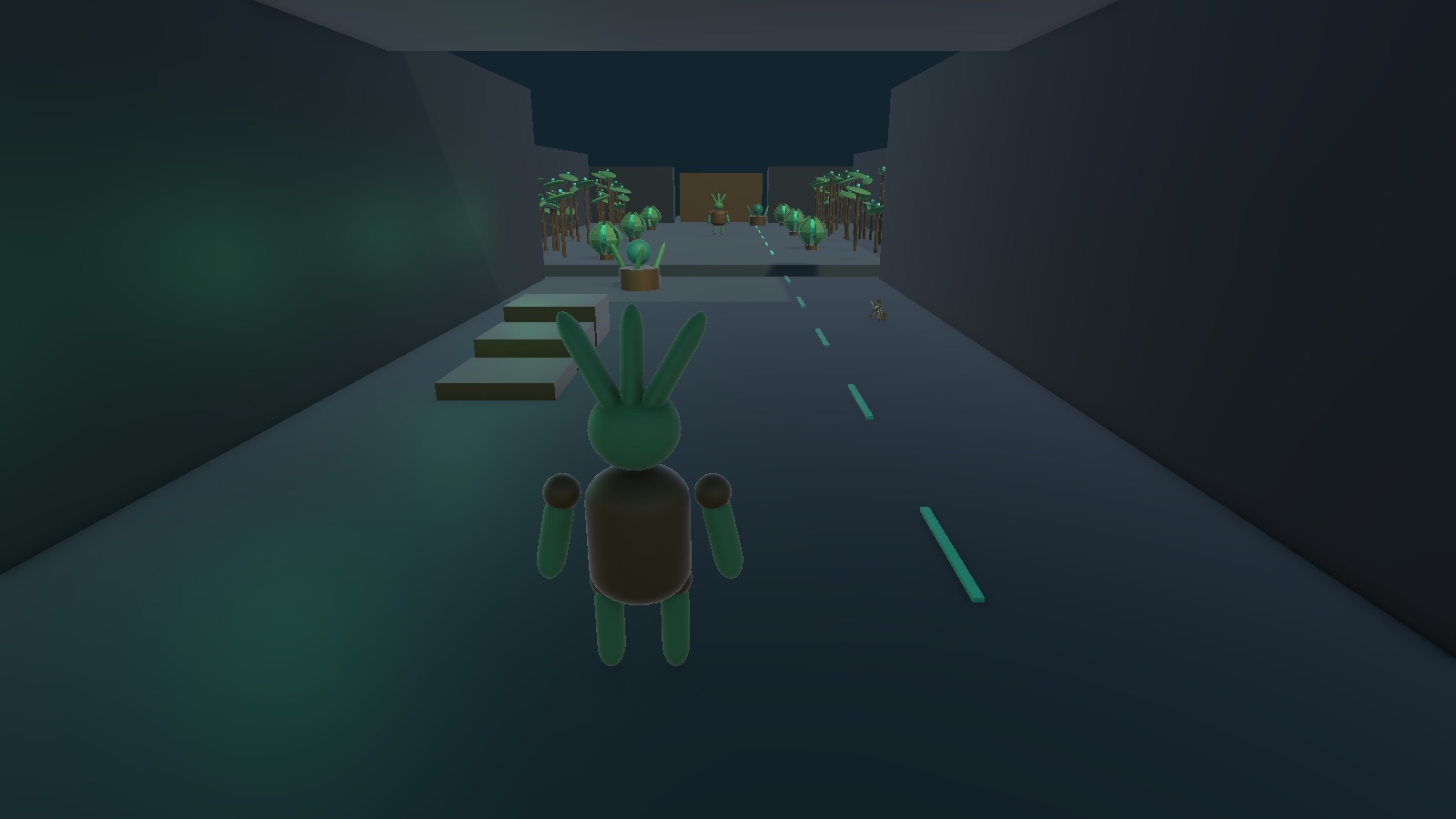
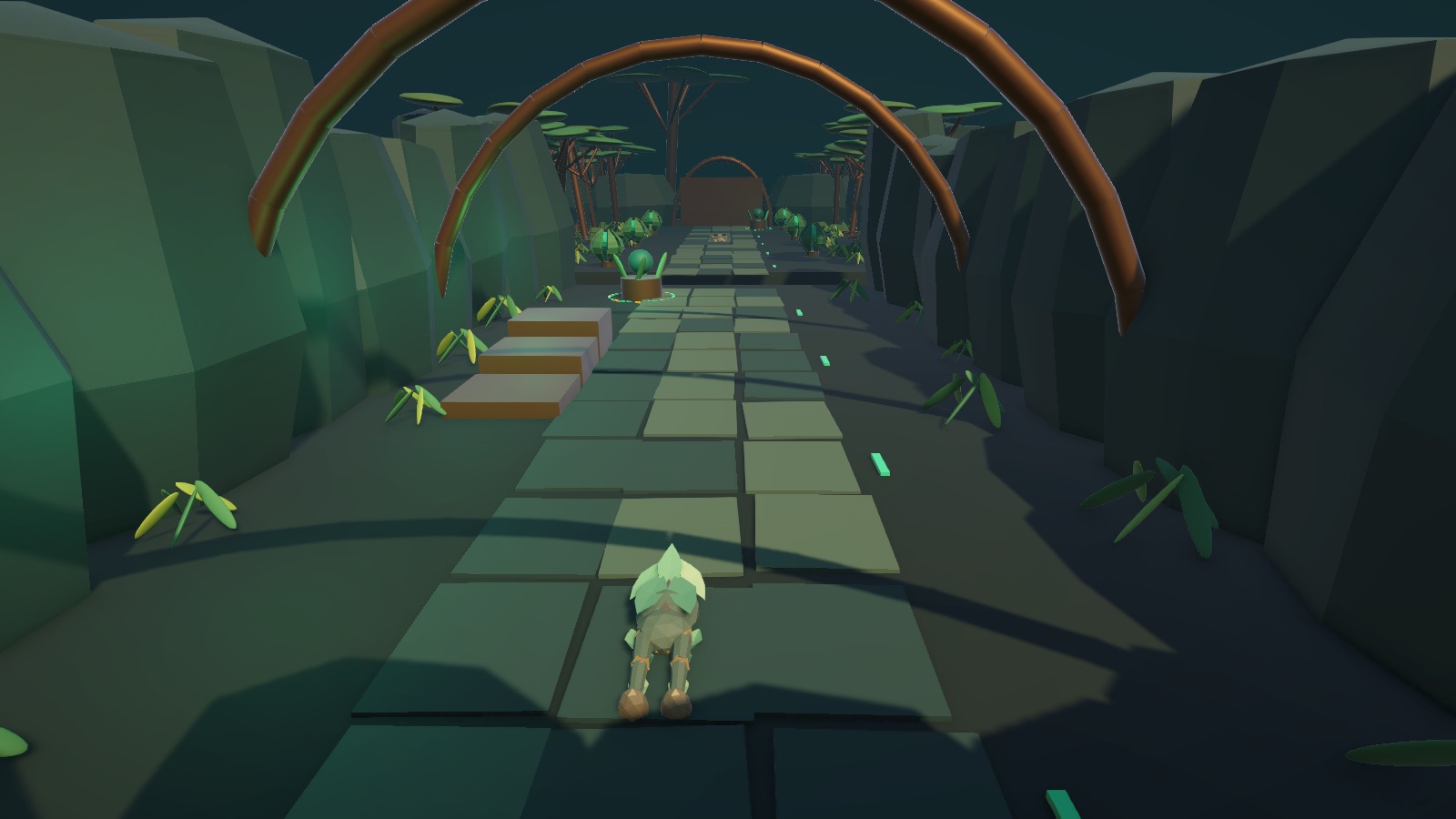
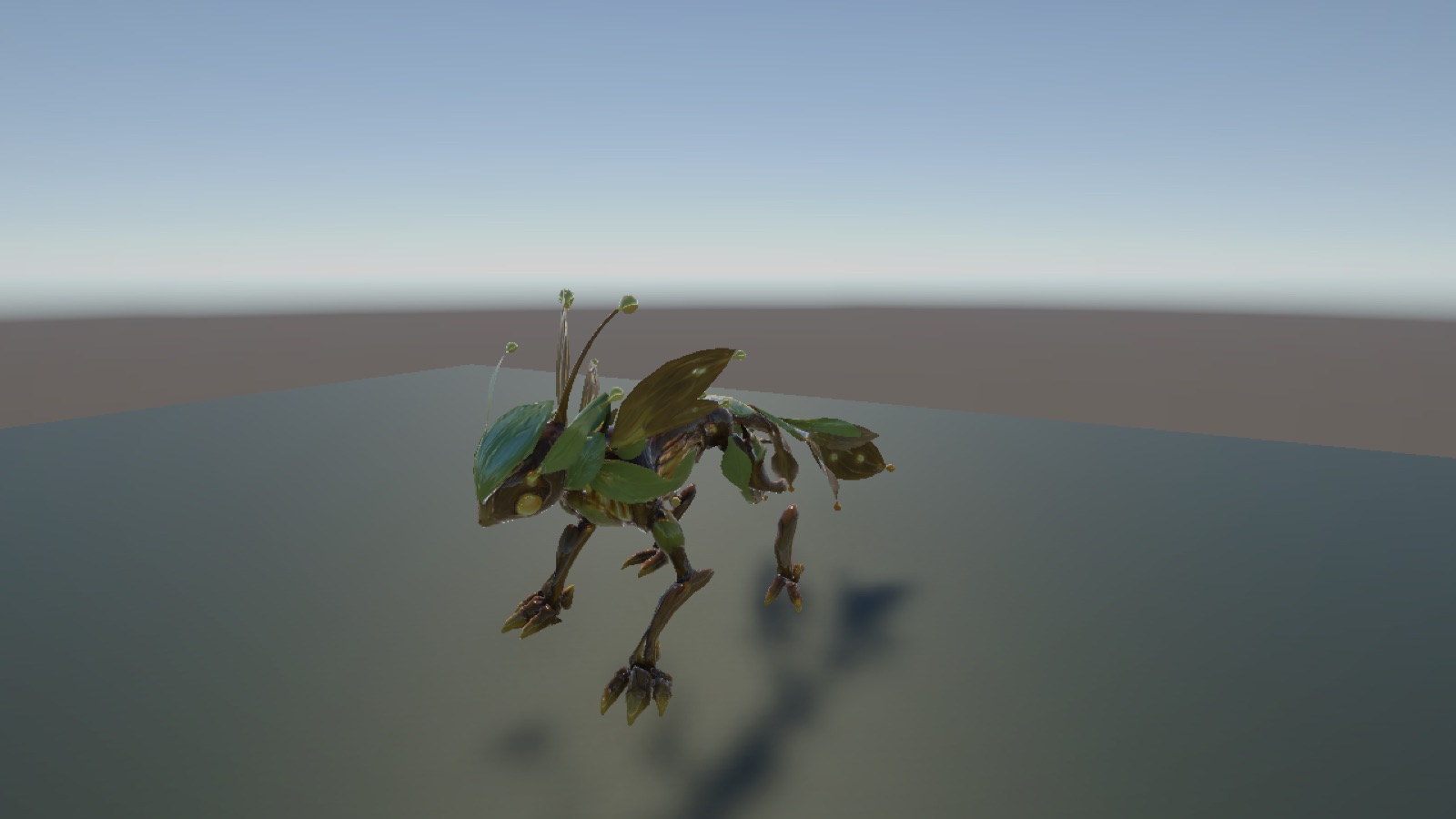
Before: the prototype's starting chamber, a grey blockout with the primitive SeedAfter: stone path, root arches, warmer light and the Blender-built player modelThe imported ambient creature that was kept
Jeremy wasn't happy with the state of the prototype and asked for a better pass. The review found a failing gamepad movement test, a level that was still a plain grey blockout, and an imported ambient creature worth keeping. Everything was committed first (27b3f85, 272 files), then three parts ran in parallel:
Rules: connecting now needs the Seed on the ground and a fresh button press after an interruption, and jumping interrupts it. Walls block melee, the enemy's sight and its strikes. Checkpoints and the finish check that progress is valid. The suite grew from 6 tests to 9, not yet run.
Characters: a Blender character kit made the player (about 2.14 m, about 1,770 triangles) and the guardian (about 2.4 m), with pivots for simple procedural animation.
Level: a stone path, distinct connection points, root arches, warmer daylight and teal light on things you can interact with.
21:58history
Not a prototype any more: one full region
projectsystemsregion
With the Unity skills installed, Jeremy changed the goal: a finished game, with only the final art deferred. His decisions: one full region (the Verdant Spire, about 45-90 minutes) across surface, underground and canopy; 2-3 symbioses; Vinebloom Stalkers; the Blooming Colossus as the final boss; mixed combat where some fights can be avoided through the environment; macOS only. The design bible's names are working names, kept in one file (GameNames.cs) so they are easy to change.
With the 12 existing tests passing, the runtime was rewritten in about 45 minutes:
Saves, settings with key rebinding, audio, scene flow, a main menu, pause with a progress journal, death and ending screens, credits.
Movement with momentum, coyote time and a jump buffer; a 3-hit combo; Threadroot swing and pull; Root Sense; passive rooting to heal (Jeremy: no cost).
Stalker AI, the Root Guardian and the Colossus fight.
Editor builders for the whole region, plus 68 generated sound clips.
Everything built without errors at 21:58. The old prototype tests were archived with the old code, so no automated tests were left.
22:52history
A baseline commit and an hourly polish run
projectworkflow
Jeremy asked what a recurring task would need to know to keep polishing the game. About 200 changes were uncommitted, so everything went into one baseline commit (377863d, 747 files). Then Docs/POLISH_LOOP.md and POLISH_LOG.md: each run makes one small change through the Unity CLI, checks that the project compiles, takes screenshots, logs the result and commits locally. It ran hourly inside the session, because a cloud schedule cannot reach the Editor on the Mac.
Jeremy pointed out that other sessions were working at the same time. That exposed a mistake: the baseline used git add -A and swept in another session's half-finished Grove files. The rules were tightened in two commits:
Skip if another session is busy, if files changed in the last 30 minutes, or if the Editor is in Play mode.
Stage only your own files, by name; never add -A, stash or reset.
Check again before recompiling, entering Play mode or opening a scene.
These are an early form of today's shared-Editor rules. The first run skipped because Jeremy was playtesting.
23:09history
The Sunken Grove replaces Hollow Meadow
worldlevel designpuzzles
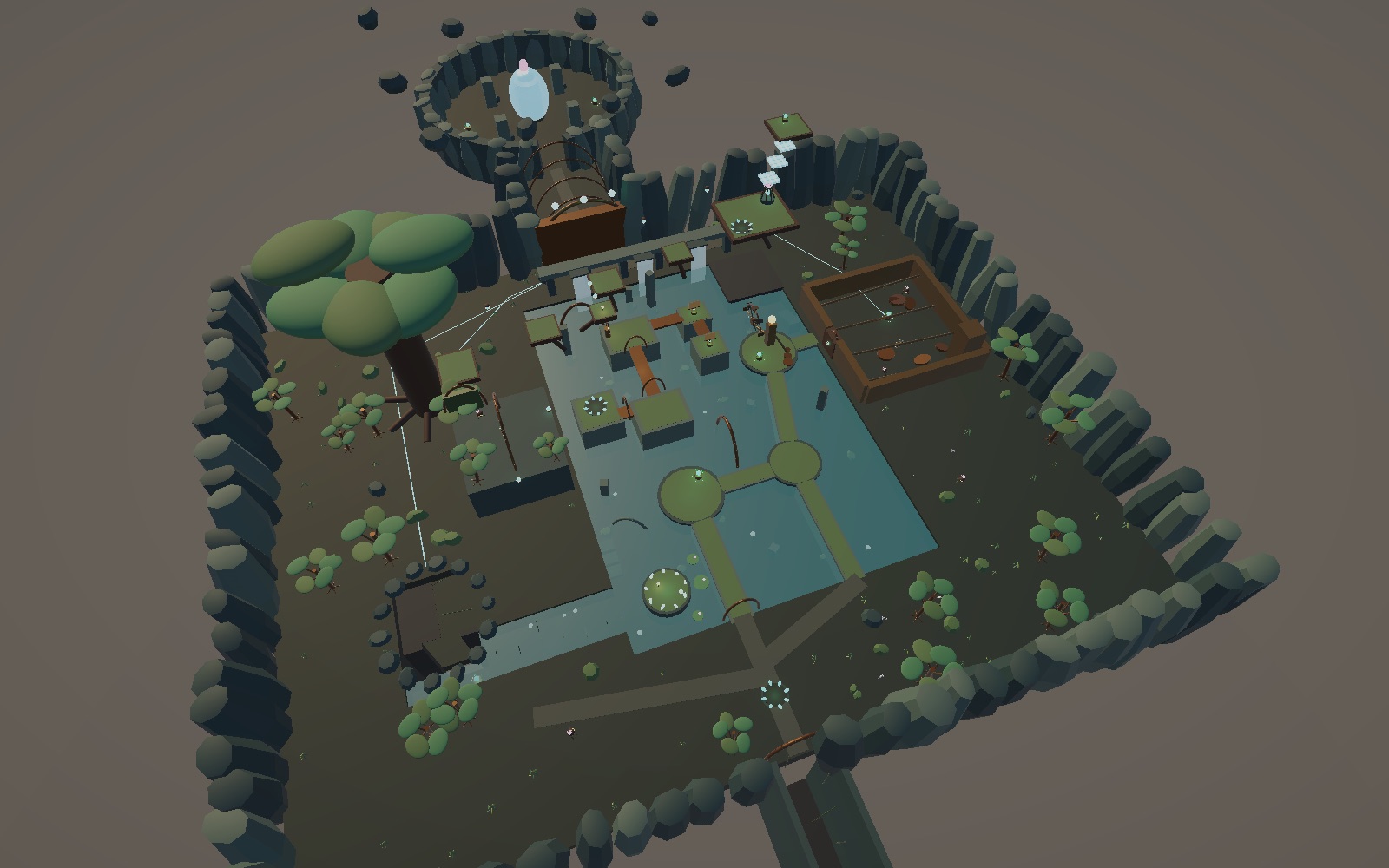
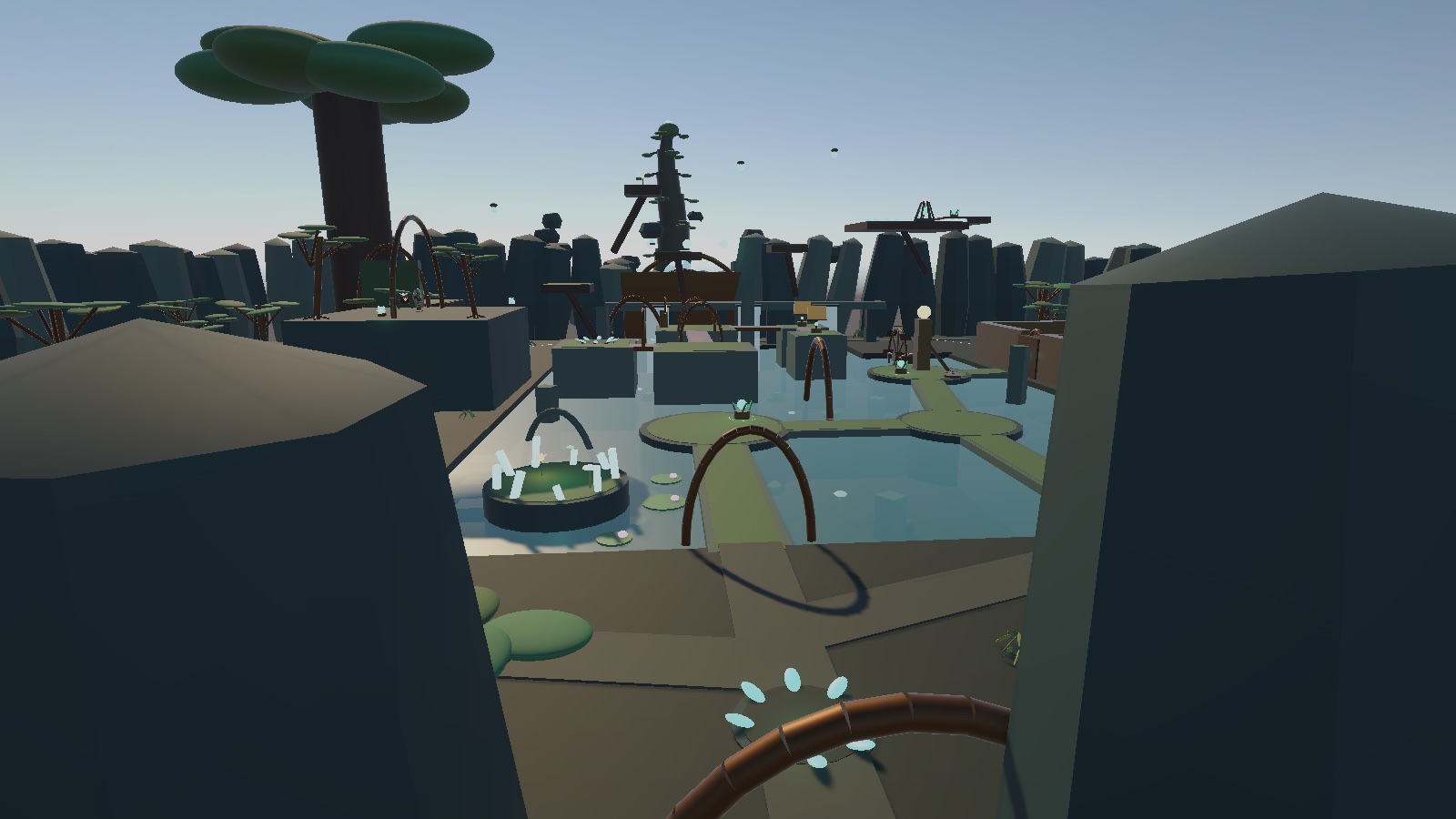
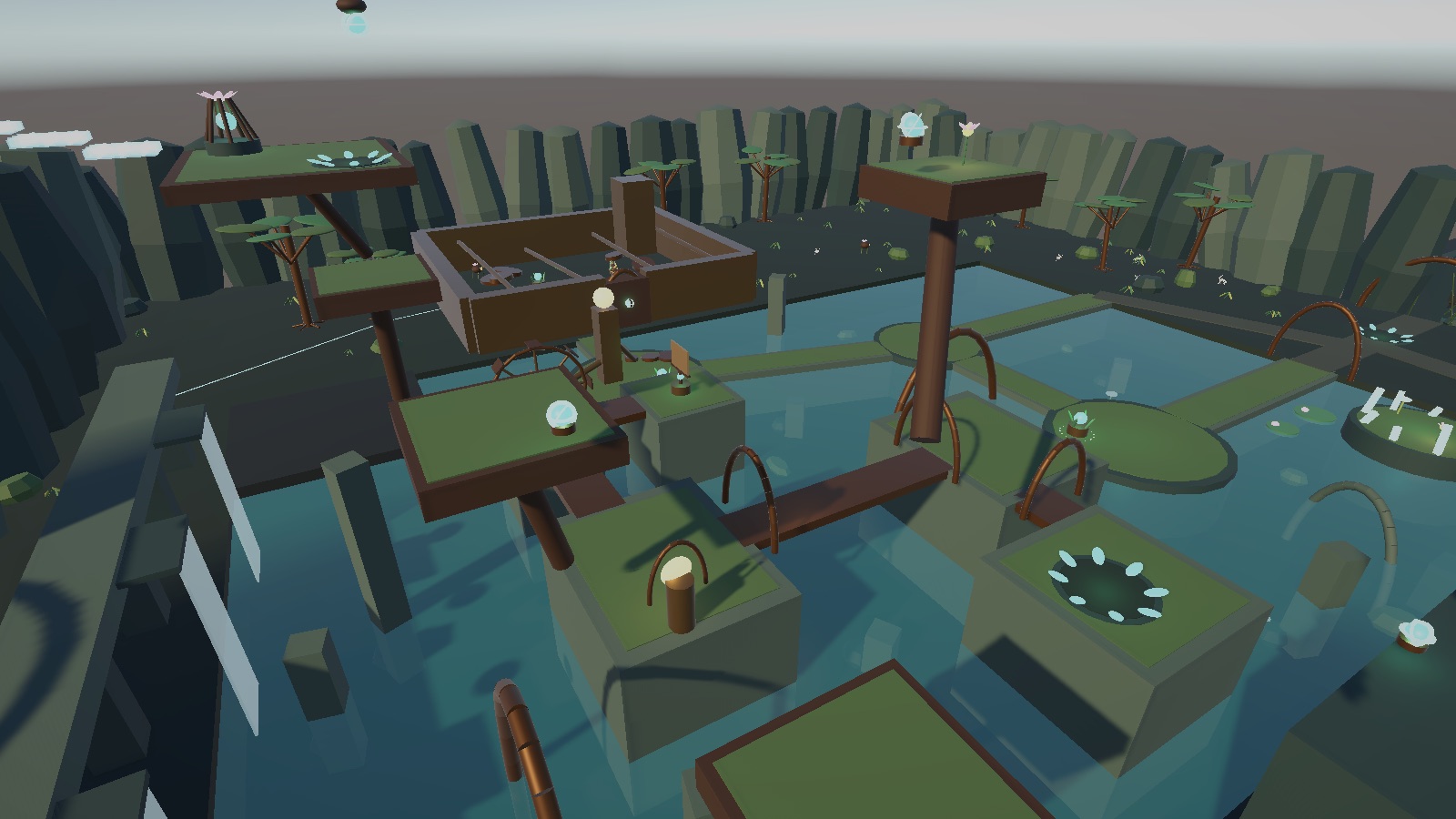
The Sunken Grove blockout from above: the basin, the Water Ruins, the hearttree and the Seed Vault at the topFrom the south entry: the causeways split toward the basin hubThe Water Ruins: platforms, a mirror post and the Flooded Engine enclosure
Jeremy shared two concept boards, the Sunken Grove area concept and a level blockout, as the goal. The Grove became the surface hub between the Seed Vault and the rest of the region:
A root elevator grows up to the Water Ruins. There a sun lens sends a beam that you steer with two mirrors (45° per turn) onto a crystal on the Flooded Engine.
The engine drains or refills the basin. Low water opens the Lower Cavern, the way down to the Root Hollows. High water floats lily pads out to the Crystal Basin.
Threadroot points lead to the Upper Grove. A Root Guardian and a Stalker guard the Canopy Gate.
Four new tests pass. Two problems were fixed along the way: grapple points over the ruins let you skip the Upper Grove fight, and an older bug made grown bridges and ramps switch off on their first growth.
Nobody had played it by hand yet. Jeremy then asked for swimming, more mirrors and a water shader; that work started at 23:16 and continued on Day 2. All names are provisional.