The Seed learned to swim, the Grove's mirror puzzle grew to five mirrors, the whole region got a look pass and a new interface, free placeholder packs replaced blockout props, and a five-legged creature walked in from Blender.
8entries16screenshots1agent
history
01:12history
The Seed swims, and the water gets a real shader
swimmingwatershaderstests
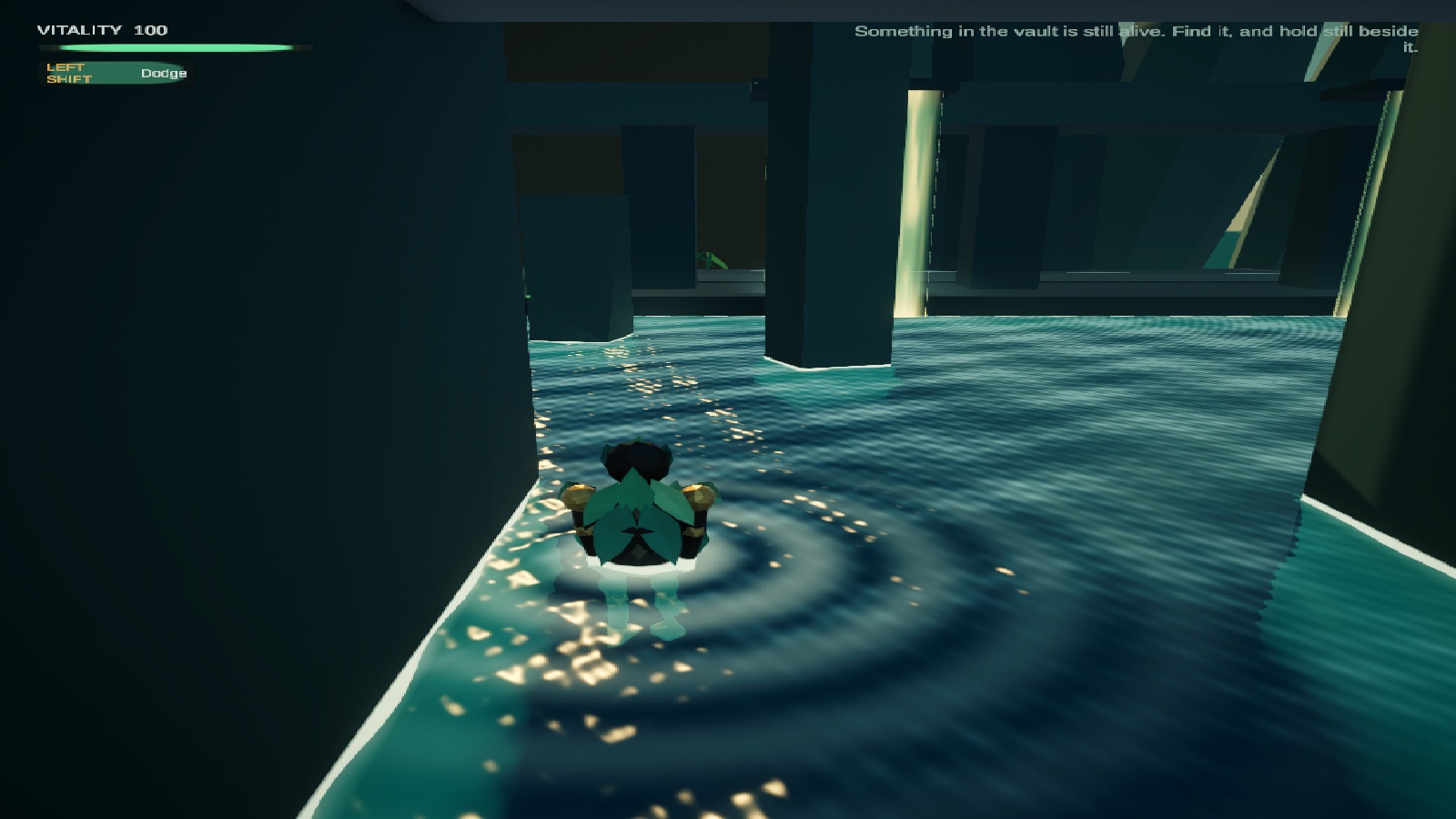
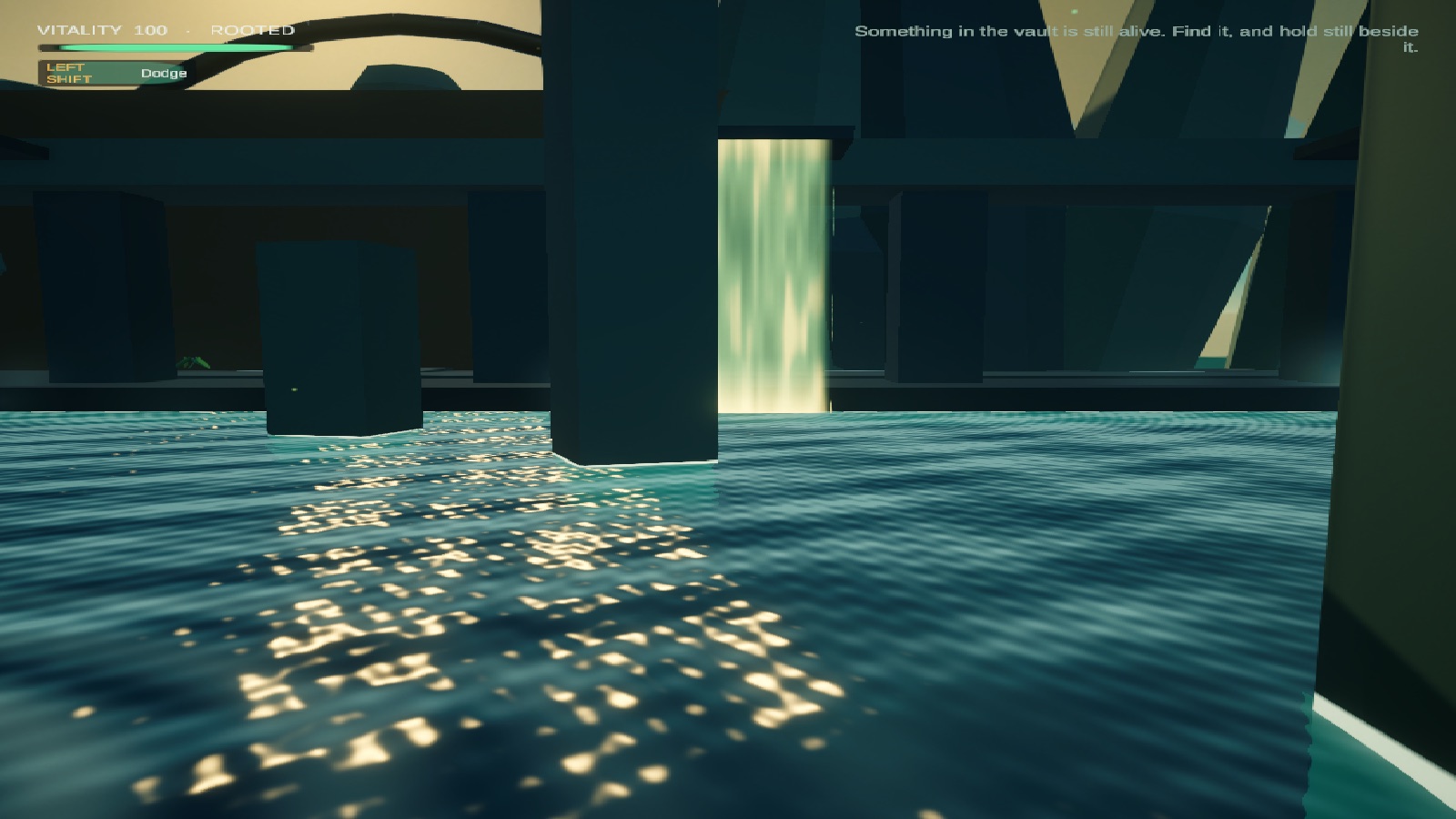
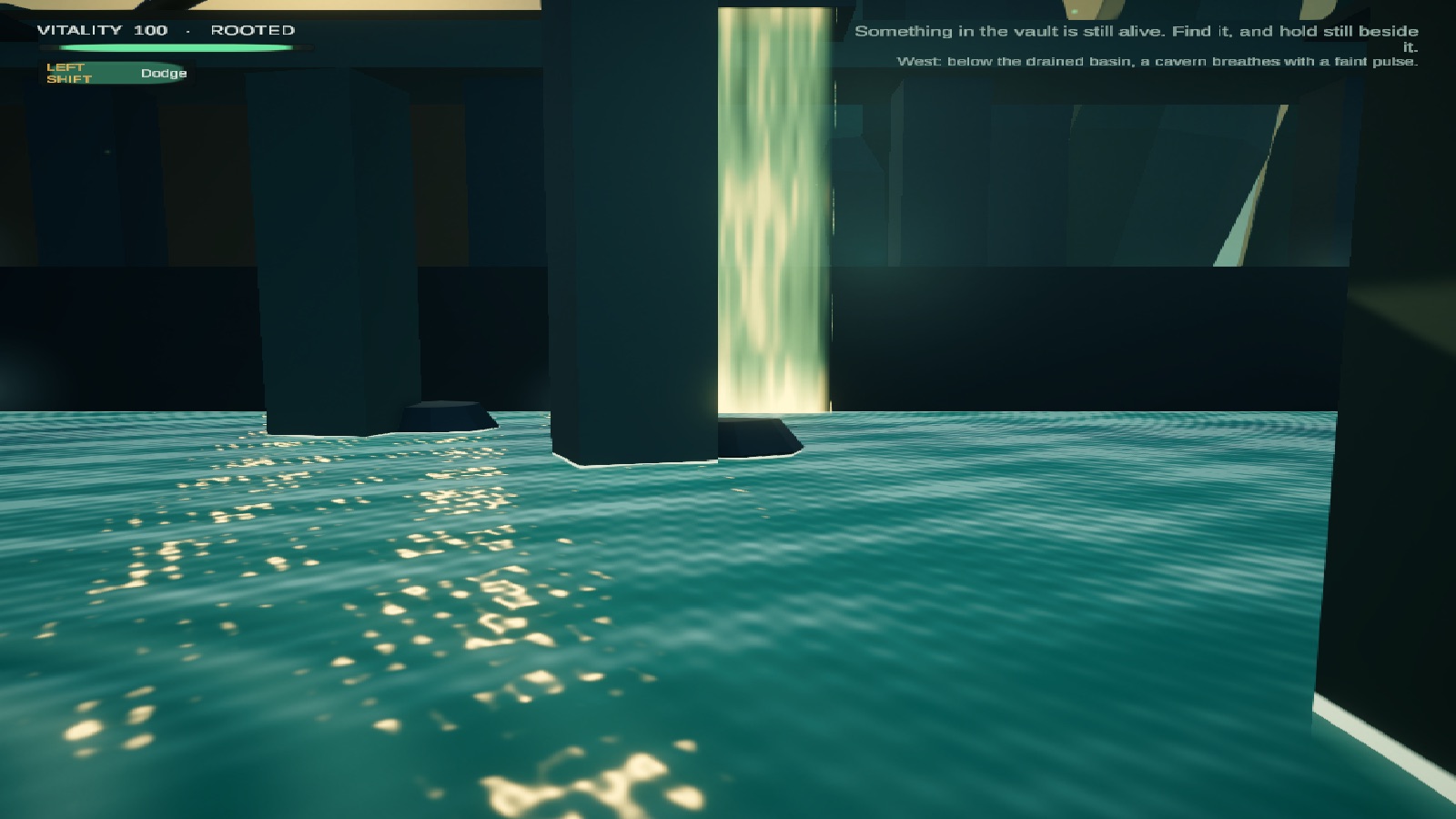
The Seed swimming at high water: ripple rings, sun glints, and its legs visible through the surfaceAn aqueduct waterfall at high waterThe same fall with the basin lowered: its foot follows the water level down
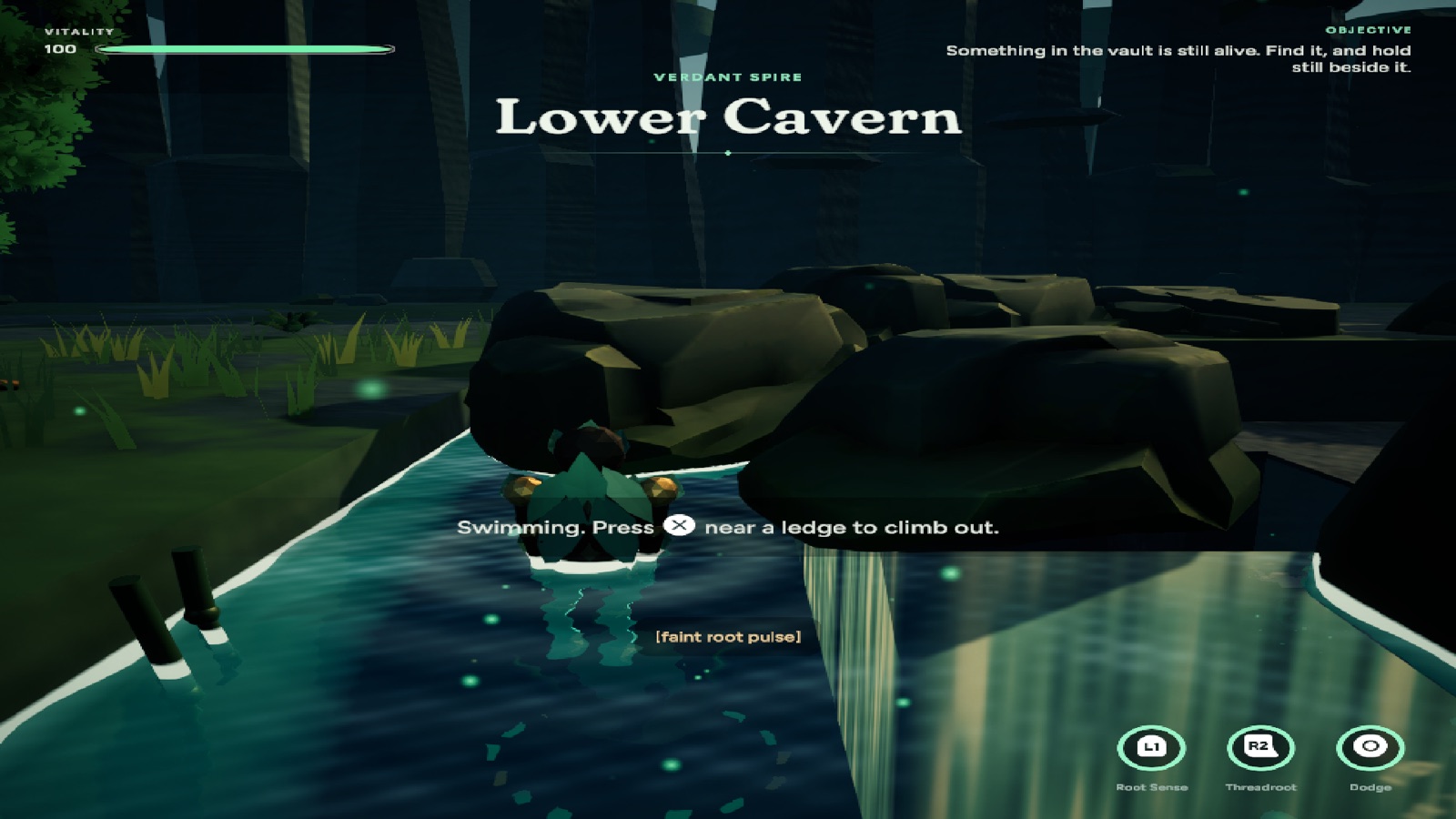
The Seed now swims instead of sinking. It floats with its head above water and paddles; attack, dodge, rooting and connecting are off while swimming. Jump climbs onto a ledge up to 0.8 m above the water, or just hops if there is none, and touching bottom ends the swim.
Gates still hold: you can't swim onto the Crystal Basin island or under the Hidden Cavern roof at high water, and the sinkhole root can't be used from the water.
Water shader: depth tint, refraction, waves, sun glints, shoreline foam, ripple rings around the Seed, and shadows. The camera stays above the surface.
Waterfalls: their foot now follows the water level, and the flooded trench spills visibly into the sinkhole.
Save file bug: the Grove tests' teardown had been writing into Jeremy's real save folder, so the save held test leftovers and the old contents couldn't be recovered. The teardown was fixed; 6 of 6 Grove tests passed with the save untouched.
Nothing was committed on Day 2; it all landed in the baseline commit on Day 3.
06:38history
A bigger mirror puzzle in the Water Ruins
puzzlelightsunken grovetests
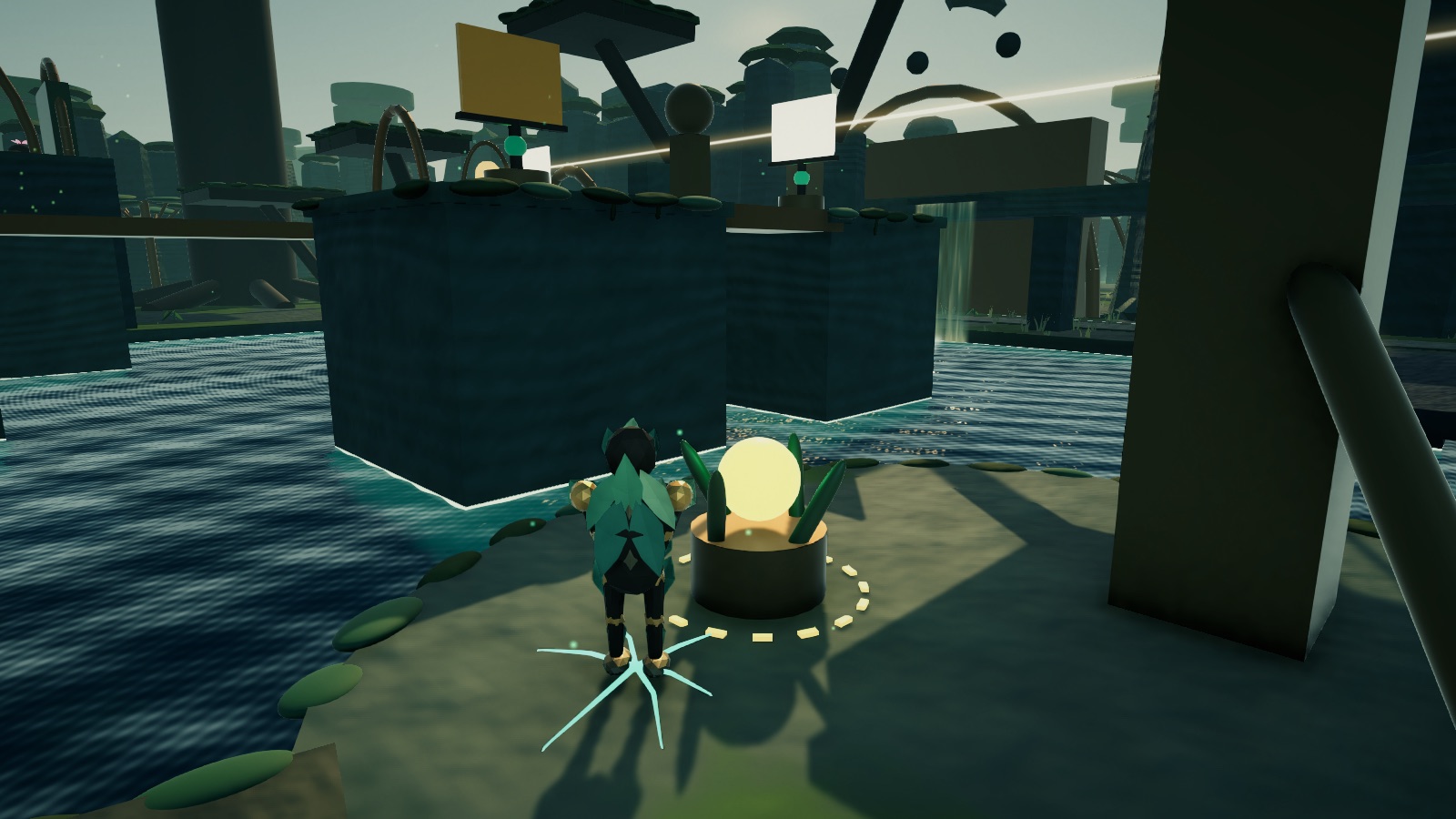
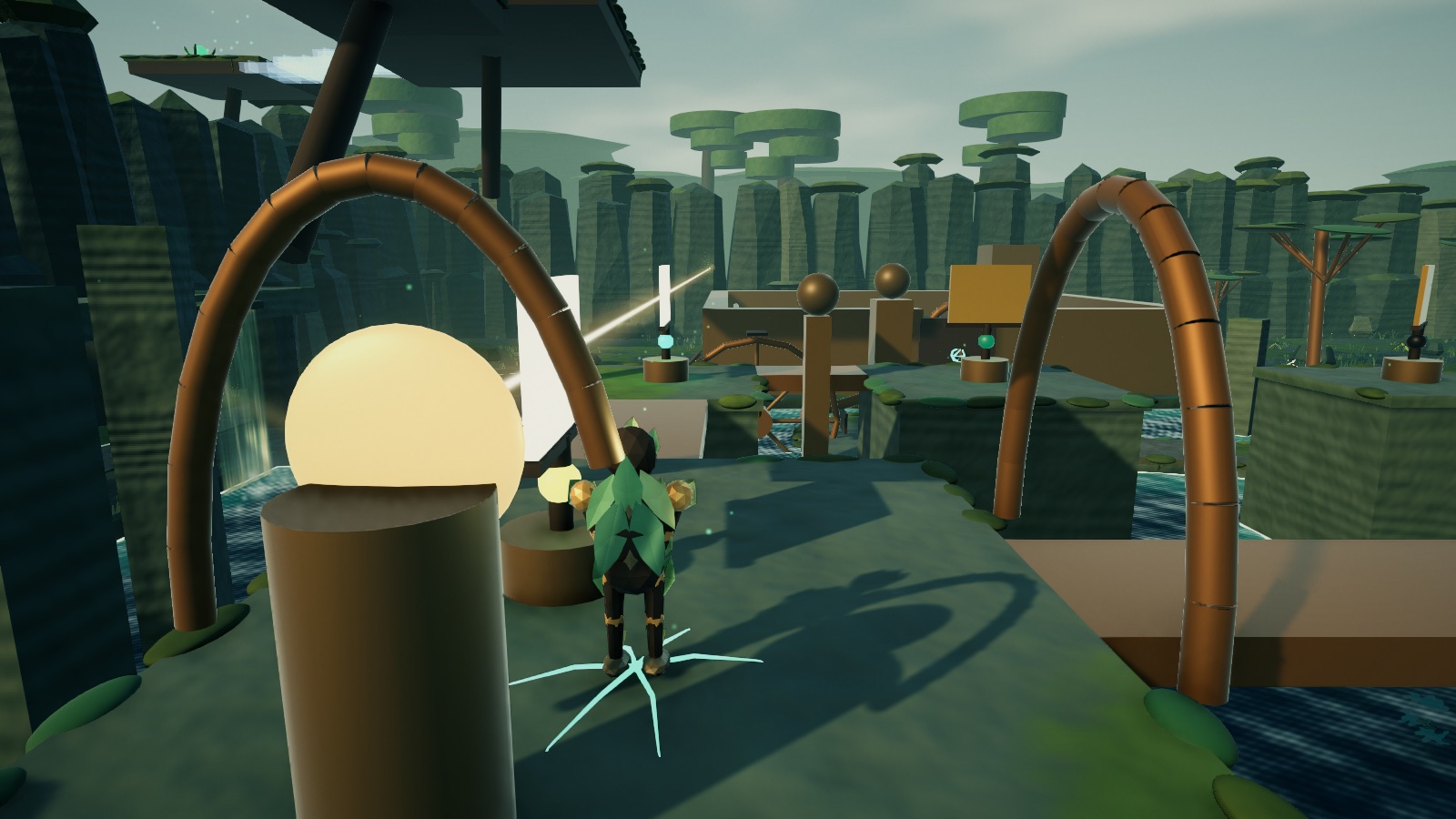
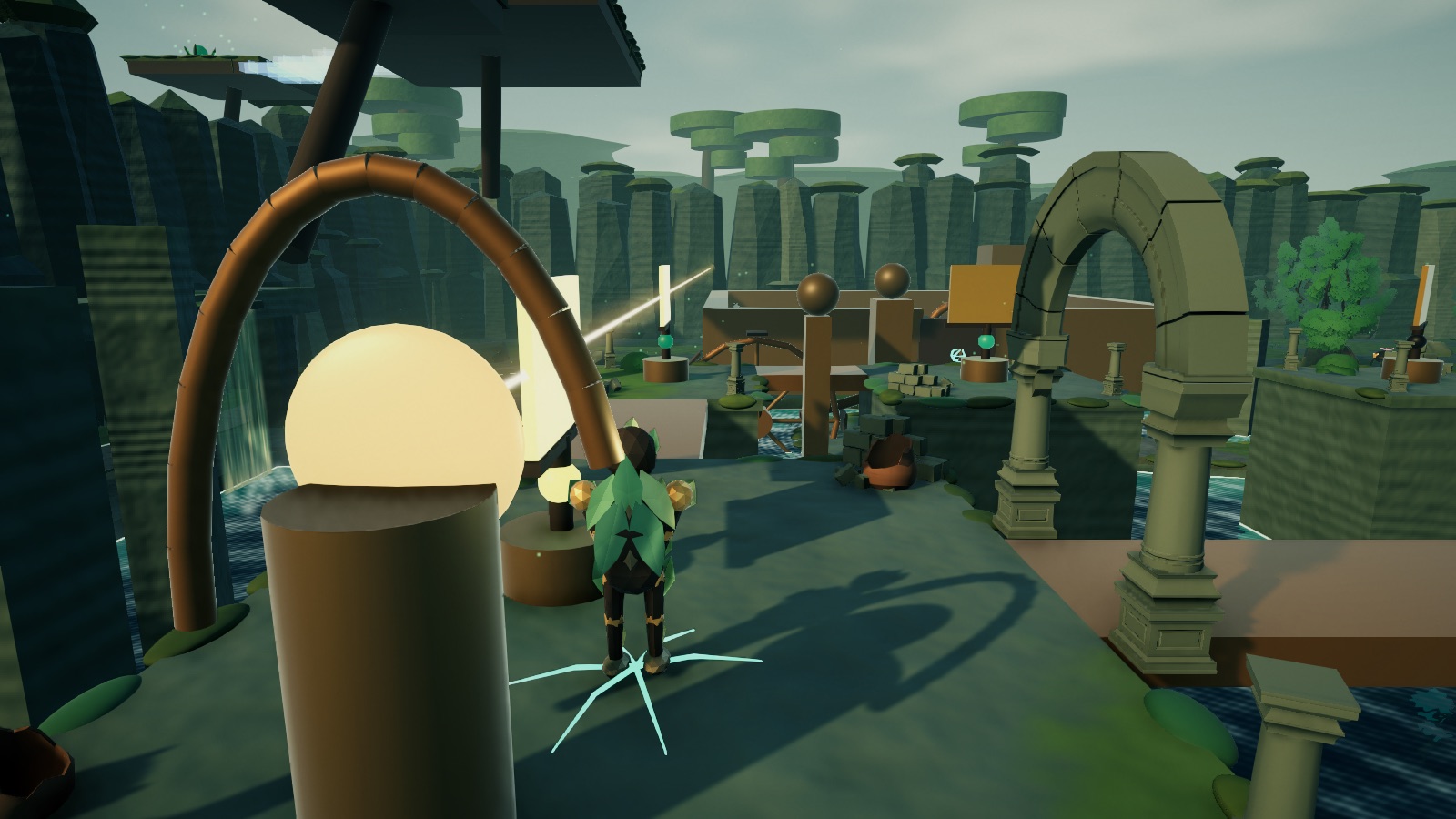
Mirrors on their pedestals near the engine, with the beam crossing the ruins behind themThe north ruins: a lit crystal in the foreground and the beam running between mirror posts
The Grove's light puzzle grew from a single turn to five mirrors in two stages. Three designs were drafted, geometry-checked and judged, and the best one was built.
Stage 1: the old answer (mirror A south) now lights a small crystal in the ruins instead of the engine. Root bridges grow out to a new pier, two locked mirrors wake, and the crystal blocks the short route to mirror B for good.
Stage 2: the light has to go the long way round the ruins, seven turns in all. A near miss sends it glinting off B's edge without reaching the engine.
Every wrong combination was checked and none reaches the engine. Old saves keep their engine powered.
Bug found: the light crystals only powered up at normal frame rates. The Editor runs at about 5 fps in the background, so in tests they never did. Fixed; all 9 Grove tests pass.
Open: the crystal, pier, mirror ids and hint text are provisional, and changing two mirrors' starting angles would cut the puzzle to five turns.
11:33history
A look pass across the whole region
artlightingshaderscamera
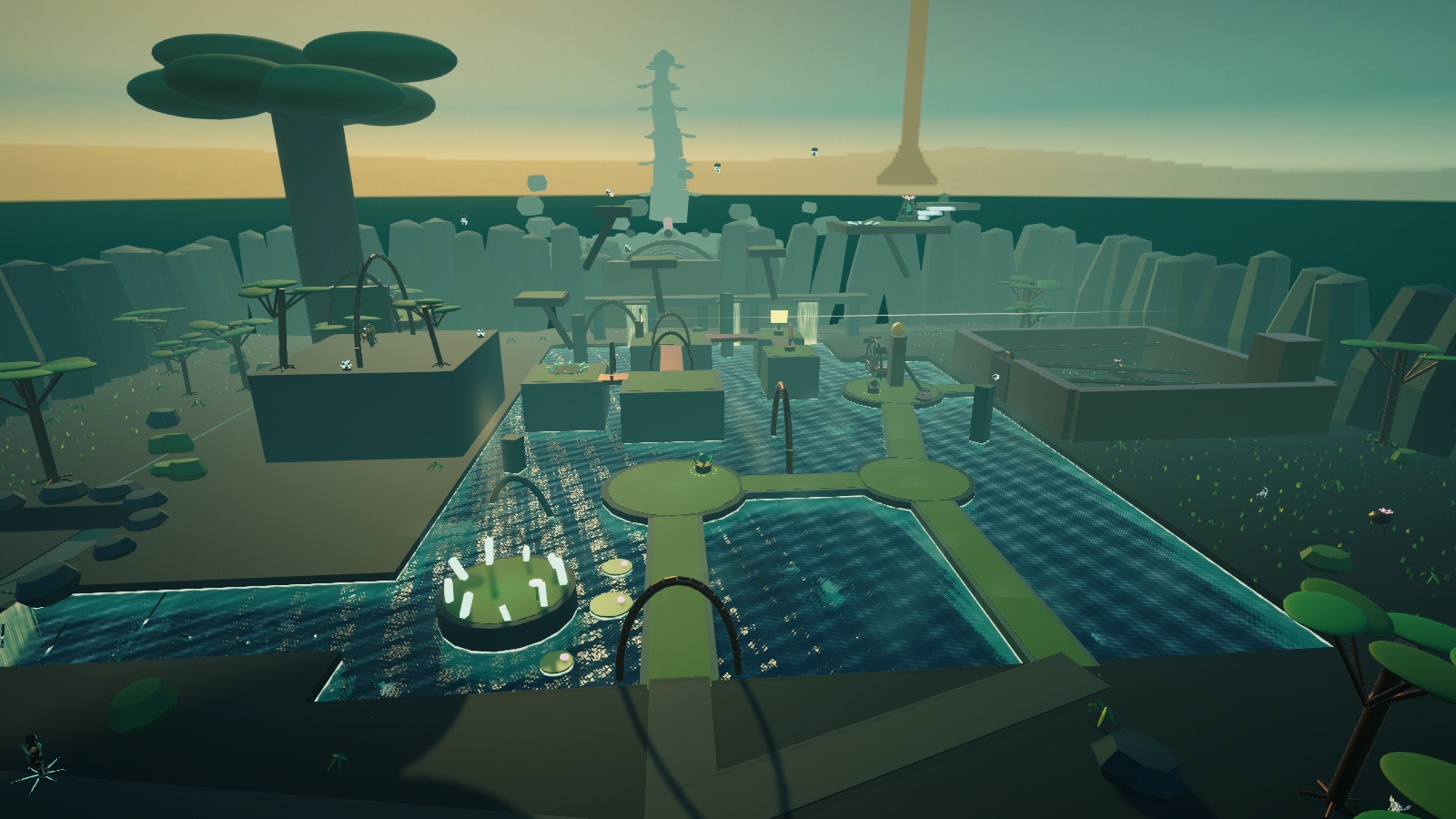
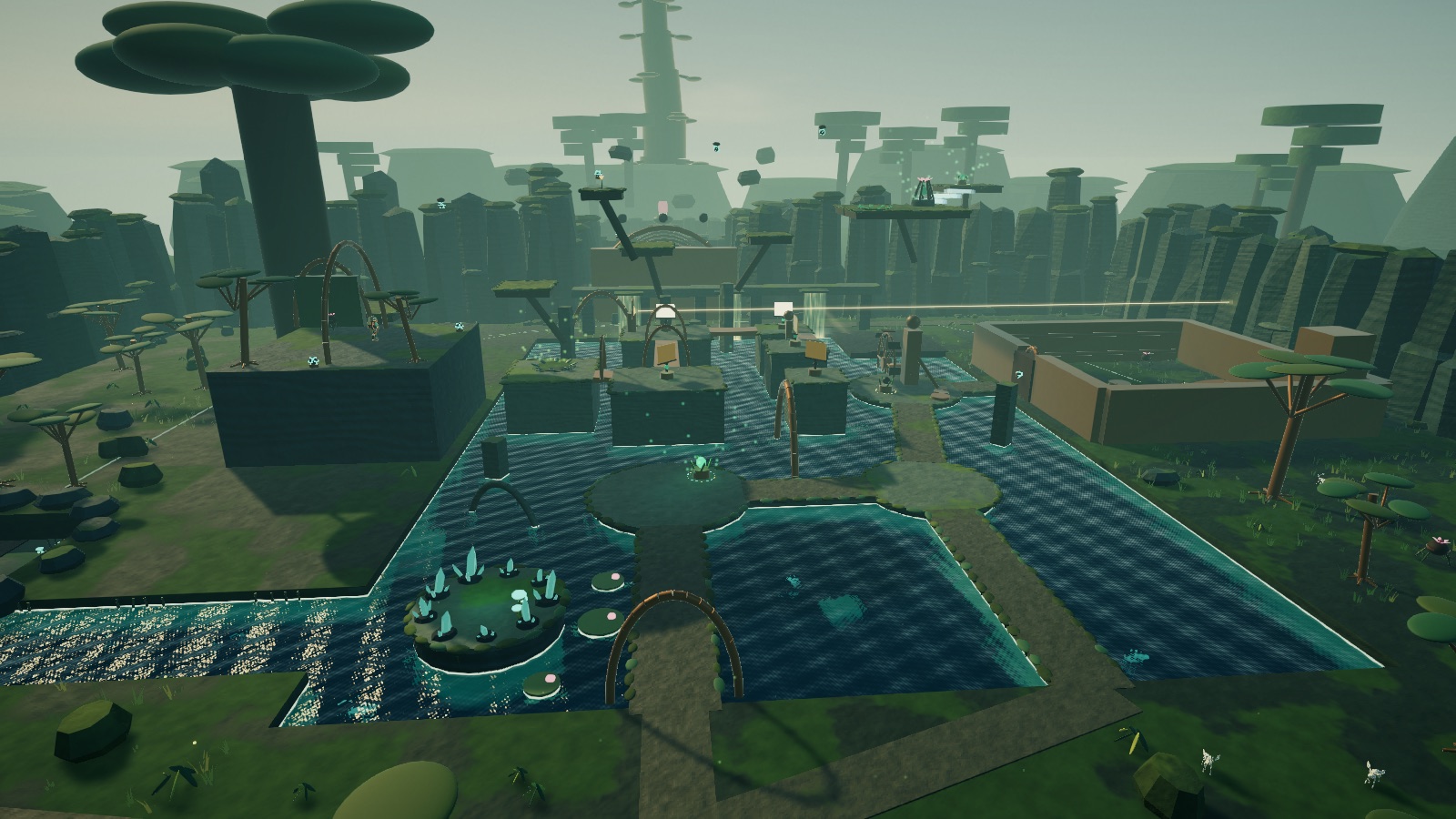
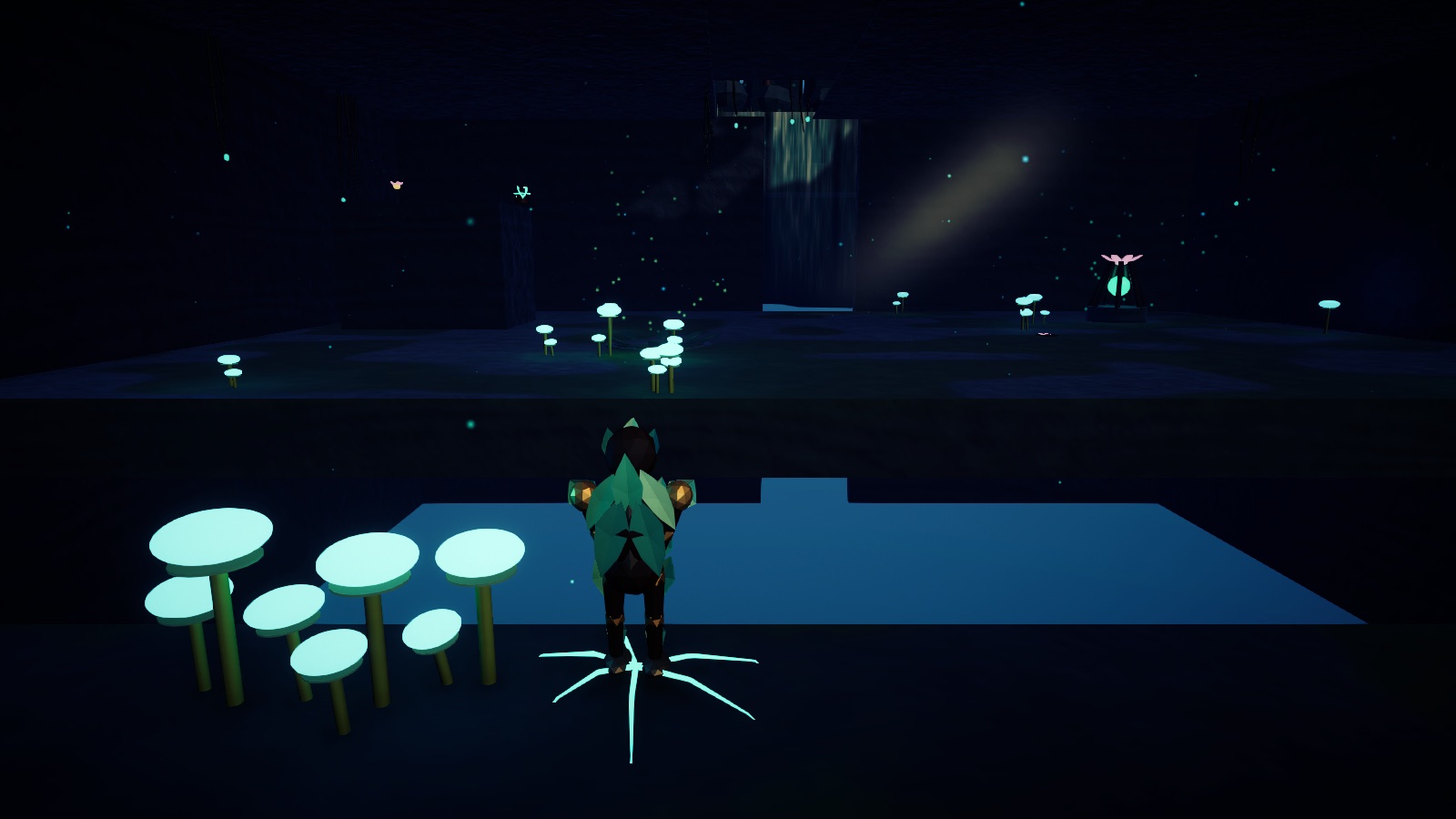
Before: the Grove from above at the start of the pass, with flat surfaces and a hard horizonAfter: the same view with the ground shader, cliff pillars, crystal island, distant hills and hazeThe Hollows after the pass: a dark cave lit by glowing mushrooms and a shaft of light
Jeremy asked to "continue to polish and make the game look great". The work went in loops: shoot the same 18 views from the player's camera (now a reusable tour script), have three critics review them, change things, shoot again.
Sky and distance: a procedural sky that fades into the fog, and hills and mesas beyond the cliffs.
Surfaces: a new ground shader for stone, soil, moss, bark and cave rock, with no textures or UVs so stretched blocks don't smear.
Mood: six area presets (dark caves, clear canopy, rose-gold dusk at the Spire), a side-on sun, 110 m shadows and ambient occlusion.
Shape: varied cliff pillars, mossy lips on walkable tops, crystal clusters, lit caves with hanging roots; the Spire is taller and reads from the Grove.
Readability: usable things glow brighter than decor, beacon spores mark open goals, and decor that blocks the Seed hides.
Two reviews found 27 problems, all fixed. Open: the sun angle, moods and framing are the agent's taste calls and need Jeremy's look; frame rate on his Mac is unchecked.
17:52history
Movement and abilities tuned for a controller
controlsgamepadfeeltests
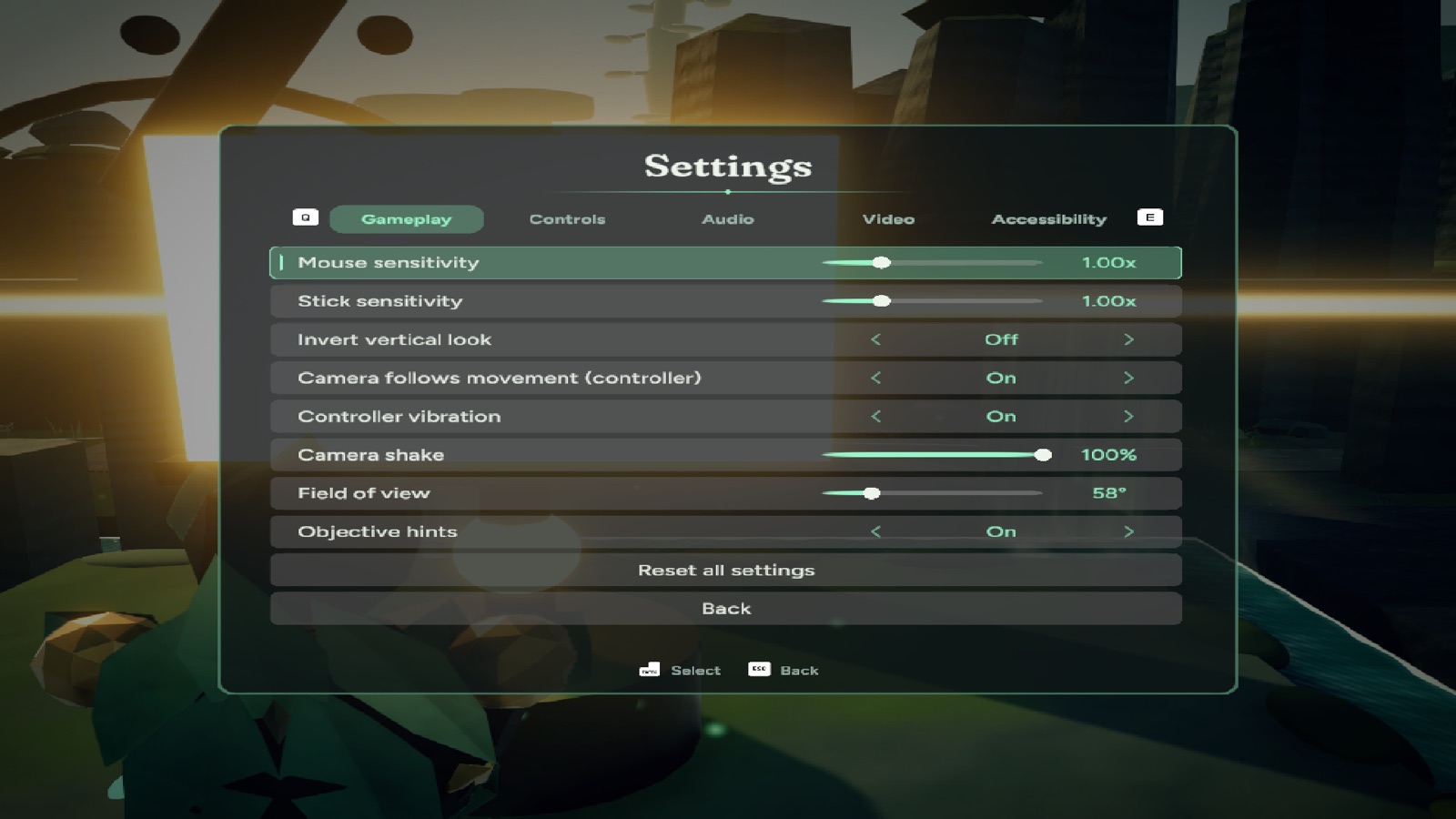
The new camera-follow and controller-vibration settings, shown in the Settings screen as restyled later that evening
Jeremy wanted the game to feel better and to test it with a gamepad. No controller was connected, so everything was checked with a simulated one; 7 new controller and feel tests joined the suite (16 of 16 pass).
Camera stick: it was a flat 140°/s. It is now fine near the centre and fast at full tilt. When the stick is left alone, the camera eases behind a diagonal run.
Prompts name the pad in hand (Cross/Circle on PlayStation, B/A on Switch, A/B on Xbox), and vibration covers hits, damage, hard landings, tethers, Root Sense and entering water.
Movement: a held jump hangs briefly at its peak, quick reversals brake, attacks step into the swing and early presses (up to 0.2 s) are kept.
Abilities: Threadroot aim no longer flickers between anchors; Root Sense pressed in mid-air fires on landing.
The Seed's body stretches on jumps, squashes on landing and leans into turns.
A "ledge catch" was tried and dropped: it gained only about 0.15 m. Open: the Seed can ride over a 2 m wall, a possible way out of bounds.
19:40history
Placeholder art from free packs, and ruins for the Water Ruins
artplaceholdersassets
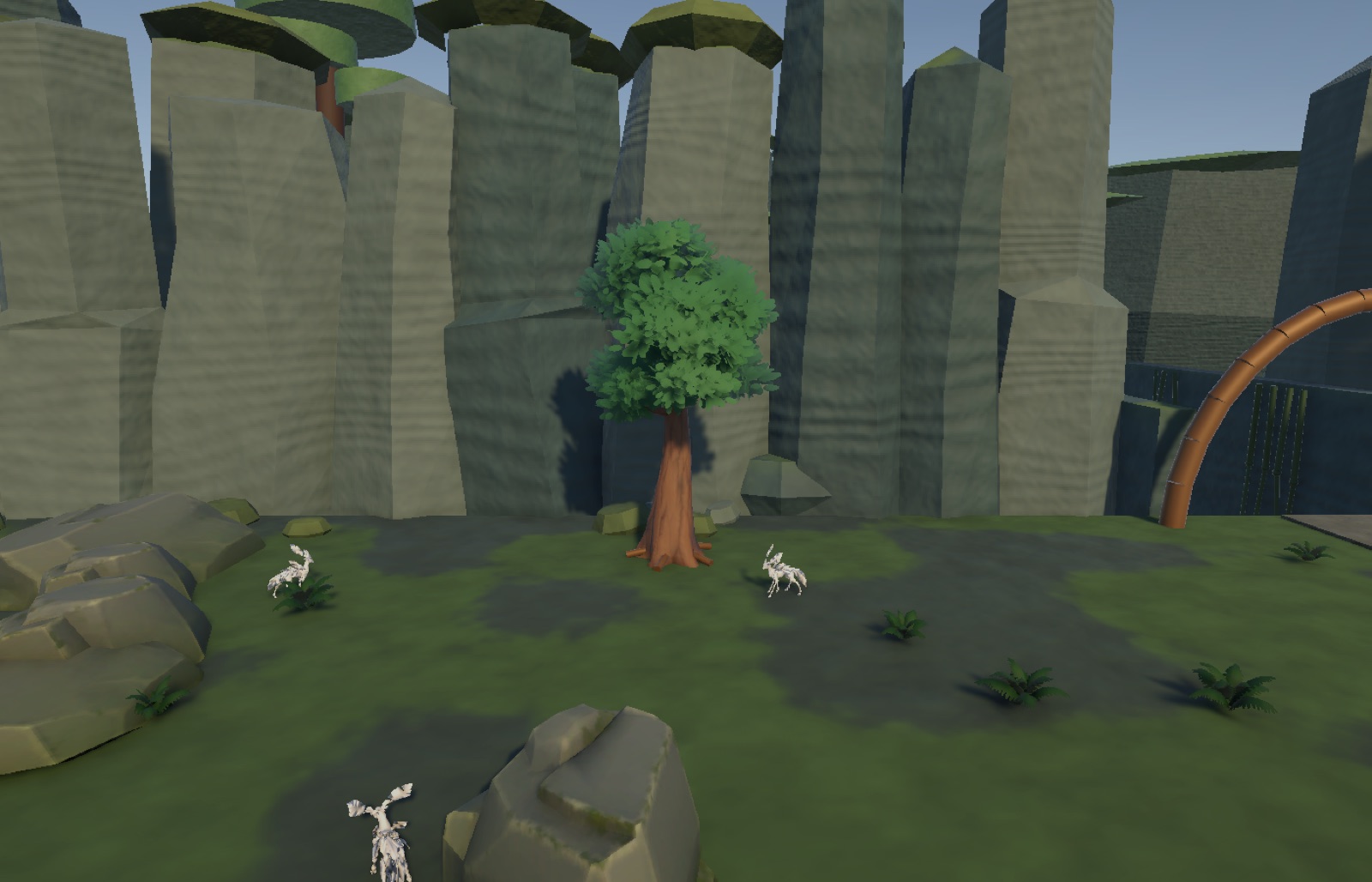
Placeholder tree, rocks and ferns from the nature pack in the Grove (Editor capture)The north ruins with a stone arch, short columns and rubble in place of the right-hand bronze arch
In a separate Codex session at 16:57, Jeremy asked for placeholder assets to make the prototype look less like a blockout. It suggested four free CC0 packs: Quaternius Stylized Nature MegaKit and Ultimate Modular Ruins, and Kenney Factory Kit and Input Prompts.
First pass (17:15): 157 decorative pieces swapped in the Verdant Spire scene (21 trees, 61 rocks, 69 fern clusters, 6 pipes). The scene's 225 colliders stayed the same.
The ruins download hit a Google Drive quota; a second copy on Poly Pizza worked, but it wasn't imported before the session stopped.
Finished by Claude at 19:35: the ruins kit is in. The two bronze arches on the Water Ruins walkway are now stone arches, and 28 columns, broken walls, rubble and pots sit on the pier corners. Walkway and bridge corners and the light beam are kept clear, and no collision was added.
Rebuilding the region used to wipe this dressing; it now reapplies at the end of the build.
Open: the ruins pack came with no licence file. It is credited as CC0 until Jeremy confirms.
20:06history
The interface is restyled
uihudmenustests
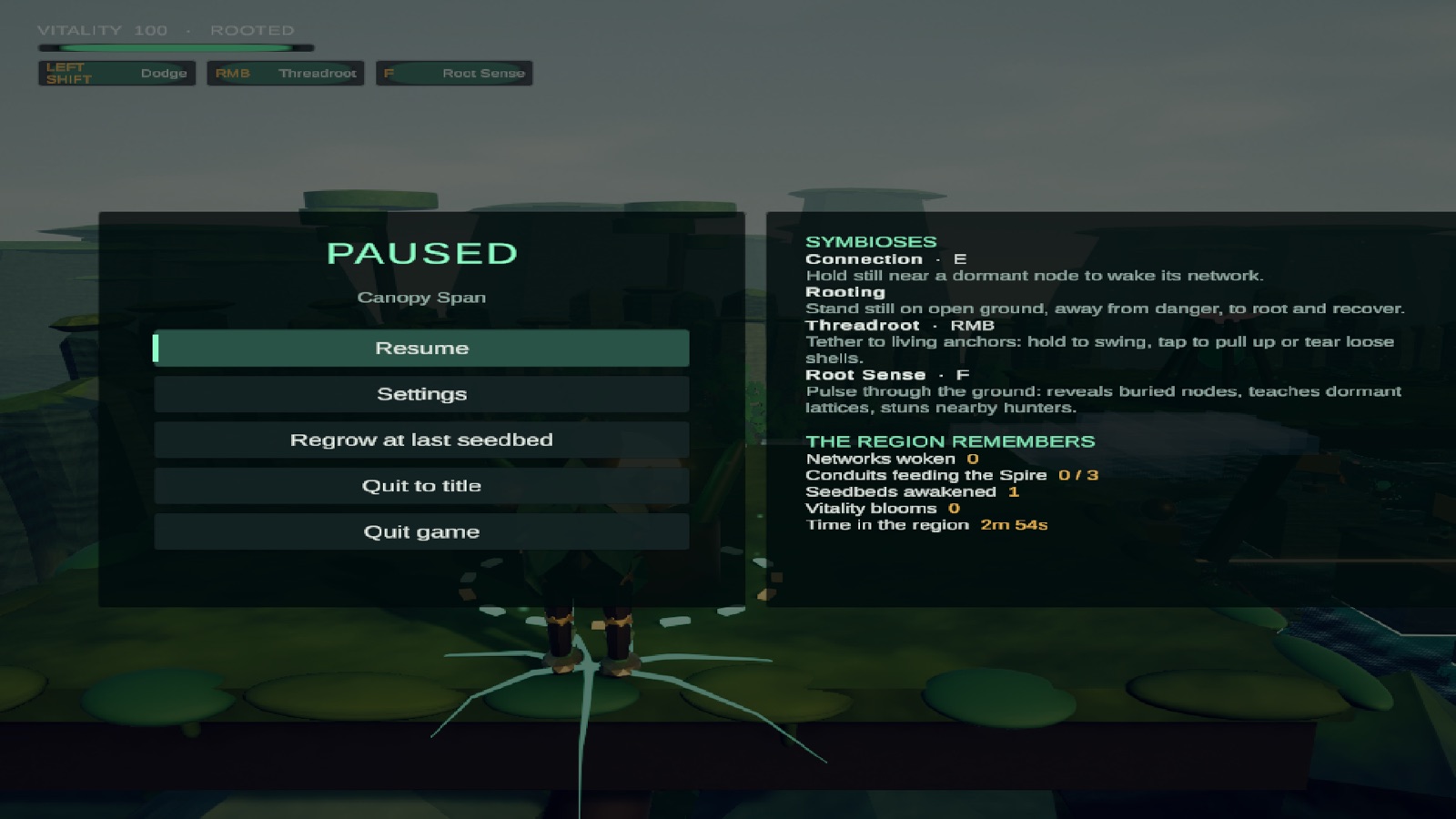
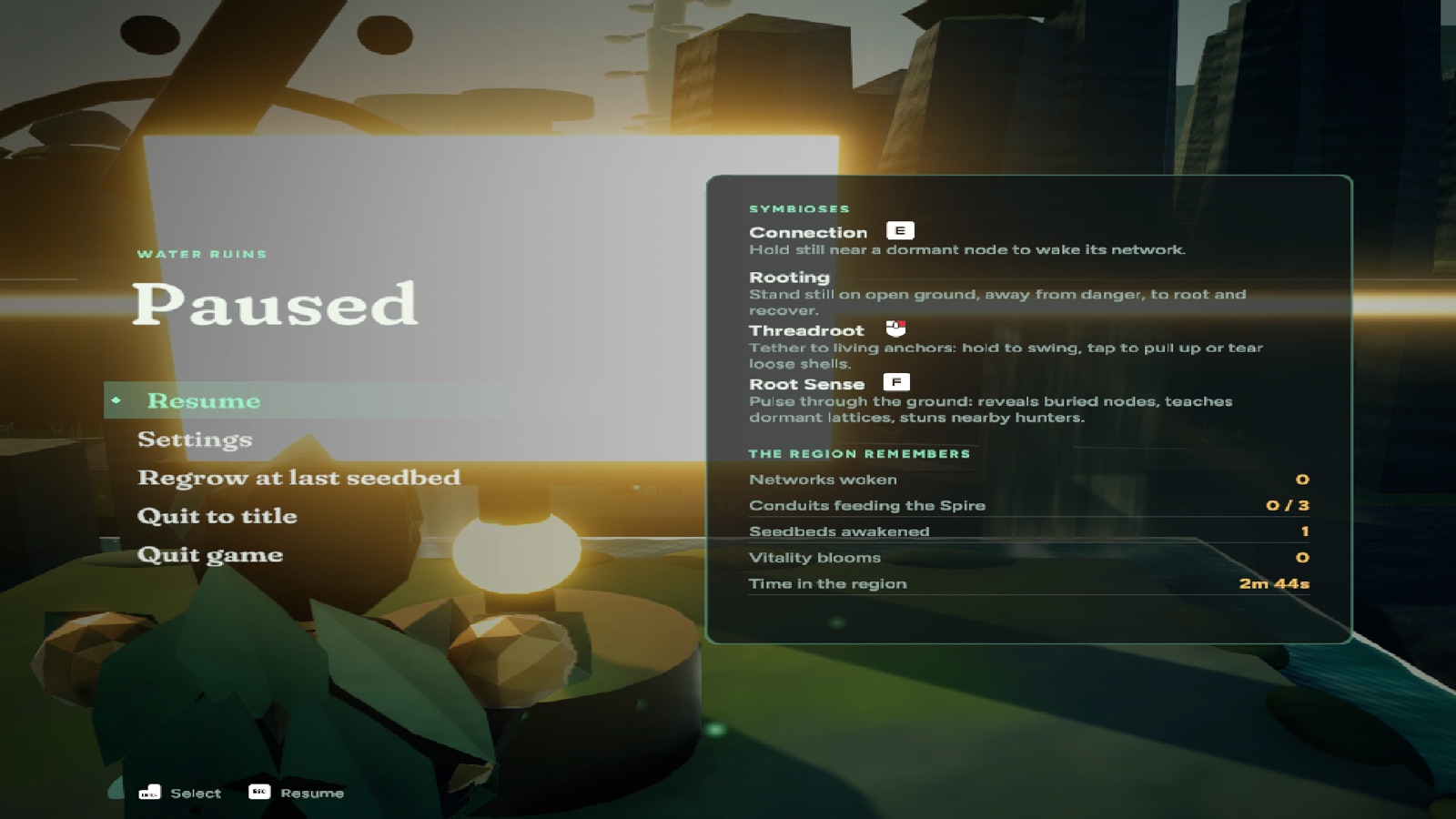
Before: the pause screen in the default font, with the HUD showing throughAfter: serif headings, a journal card, key icons and button hints at the bottomThe new HUD with a simulated PlayStation pad: L1/R2/Circle badges and a Cross prompt while swimming
Jeremy said the in-game UI was "kinda ugly". The agent captured every screen first, then rebuilt the shared UI style and each screen on it.
Type: Fraunces (a soft serif) for titles and Figtree for body text, both free open-licence fonts and credited.
Look: translucent dark-teal panels with rounded corners and a faint green outline, pill-shaped prompts, and a dark wash behind corner text so it reads against a bright sky.
Button icons: real key and button pictures from the Kenney pack for keyboard and mouse, Xbox and PlayStation. Other pads show button names as text.
HUD: vitality bar top left, objective top right, serif area titles, and round ability badges with a cooldown ring. The HUD fades out under any menu; before, it showed through the pause screen.
The first version drew inline icons at half the text height; they were scaled up.
Two new interface tests bring the suite to 18 of 18. Open: the style is the agent's choice, and only 1920x1080 was checked.
21:17history
Getting a real controller recognised
controlsgamepadinput
Jeremy plugged in a controller and the game didn't respond. The problem was below Unity: the Mac's USB list showed only the keyboard, mouse, hubs and a network adapter. The likely cause was a charge-only cable. Two simulated gamepads left over from the afternoon's tests were removed so they couldn't take over as the current pad.
After a reconnect, the Mac saw it: a ShanWan-made Xbox 360 clone ("XBOX 360 For Windows").
Unity treated it as a generic joystick, which the game's controls ignore. A layout for wired Xbox 360-style pads on macOS was added (ControllerLayouts.cs), so it now registers as a gamepad, centred with no stuck buttons.
Vibration doesn't work on these pads for now; they need a different rumble signal.
A 3-minute button recording caught nothing, most likely because Unity ignores pad input while its window isn't focused.
Open at the end of the day: each button's mapping is unconfirmed, and so is whether pad input should reach the Editor while it is in the background.
23:47history
A five-legged creature walks in from Blender
charactersriganimationblender
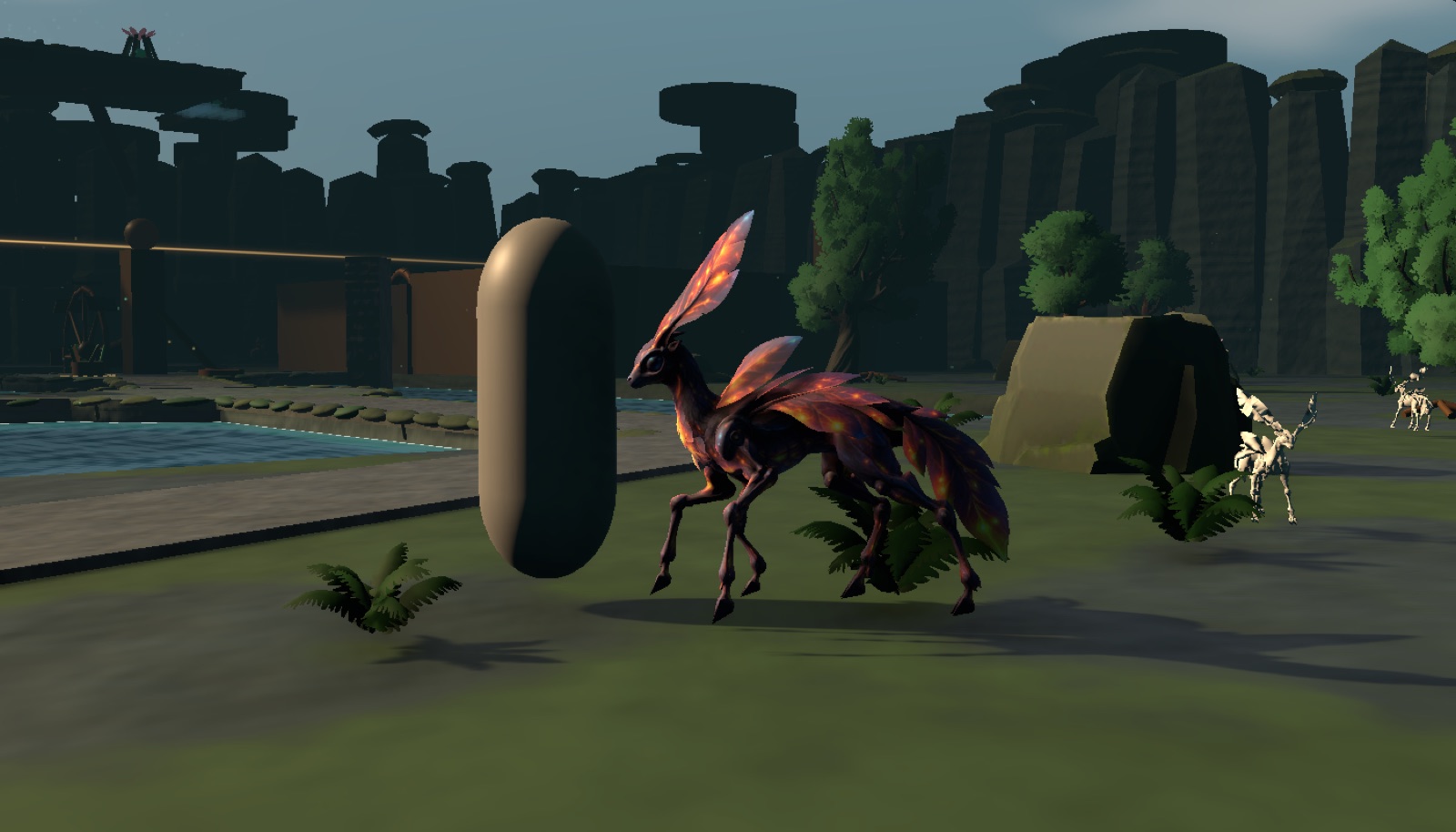
The creature rendered in Unity mid-stride, with its middle front leg liftingIn the Verdant Spire beside a 2 m capsule standing in for the player; the old pale Grazers are behind
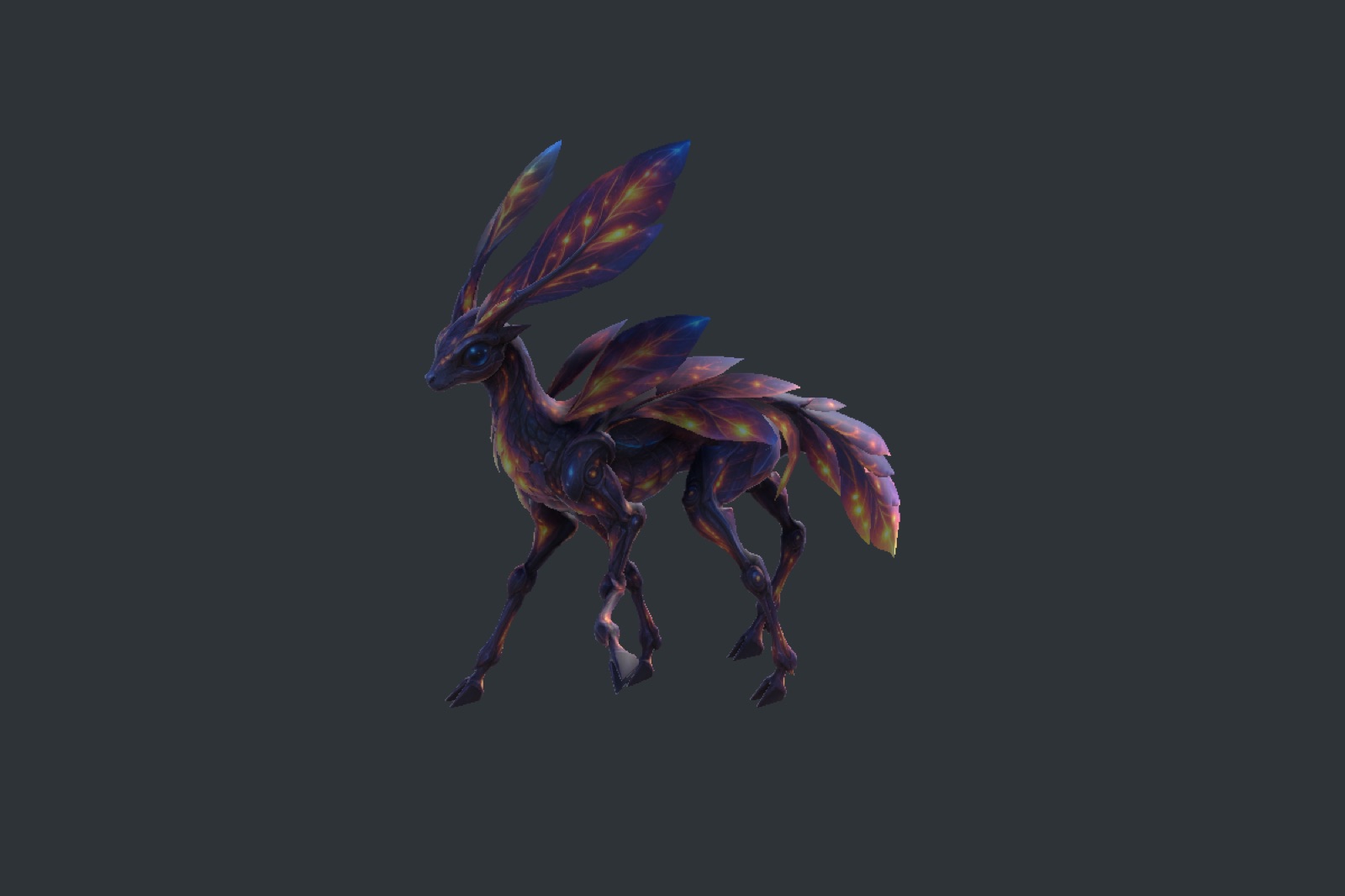
Late in the evening Jeremy opened a horse-like "mechanical dragon" from Tripo in Blender and asked for its rig to be fixed and a walk made. The next day it turned out to be the model for the Glimmer Grazer.
Rig problems: one hoof bone controlled about 1,900 vertices across the chest; the legs didn't match each other; the "Root" was really the hips; and a third front leg had no bones at all.
Fixes: horse-style bone names, rebuilt weights, a real root bone on the ground, and foot controls (IK) on all five legs.
Walk: after Jeremy pointed out the middle leg and asked for smoother, more biomechanical motion, it became an even 5-beat gait in a 44-frame loop, with shock absorption at each footfall.
In Unity: an in-place walk (the game moves the creature), a new 4 s idle, and five of them wandering the Verdant Spire at about the Seed's 2 m height, using the Grazers' wander script.
Open: Jeremy then saw them jumping between spots. The cause (the walk carried root motion) was fixed just after midnight.